
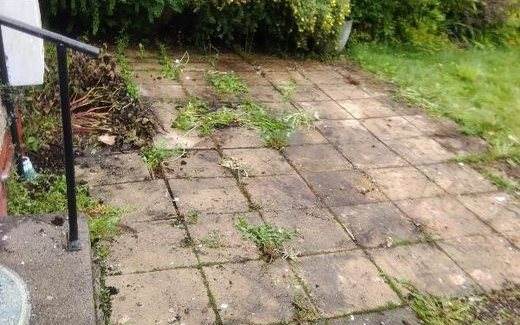
A professional garden clearance is simpler than most people expect. You tell the clearance company what needs to go, you get a quote, and on the day a team arrives, lifts and loads everything, sweeps up and takes the waste away to be sorted and recycled. You do not need a skip, a van or a free weekend. This guide walks through each stage, what is and is not included, how quotes work, the best times of year to do it in Scotland, and what you can do beforehand to make the job go smoothly.
What a garden clearance usually includes
A garden clearance is about removing waste, not ongoing gardening. Depending on what you need, it can cover:
- Green waste: cuttings, branches, hedge trimmings, weeds, leaves and bags of garden waste that have built up over time.
- Landscaping waste: lifted turf, soil, old paving slabs, edging and broken pots, none of which can go in the brown bin.
- Garden furniture and junk: old tables and chairs, rusty barbecues, broken toys, trampolines and anything else that has been left outside.
- Structures: old sheds, fence panels and decking, dismantled and taken away. Our guide to removing an old garden shed explains what that involves.
- Outbuildings: many garden jobs include the garage or store as well, which is where a garage clearance in Glasgow often fits in alongside the garden.
If you also need overgrowth cut back before it is removed, say so when you ask for a quote, so the scope of the job is agreed in advance. What a clearance cannot include is hazardous waste. Asbestos, garden chemicals and similar materials need a specialist, and any shed or outbuilding built before 2000 could have asbestos cement roofing or panels, which should never be broken or cut.
How the process works, step by step
1. Tell us what needs to go
Describe the garden and the waste, and send photos if you can. It also helps to mention access: whether the garden is reached through a close, up steps, along a narrow lane or across a shared back green. Access affects how long the job takes far more than people expect.
2. Get a clear quote
Garden clearance quotes are usually shaped by four things: how much waste there is, what it is made of (soil and rubble are much heavier than cuttings), how easy it is to carry out to the vehicle, and whether anything needs dismantling. A reputable company gives you an up-front rate before the work starts, so there are no surprises on the day.
3. On the day
The team should let you know when they are on the way. Walk them round the garden, point out what is going and what is staying, and they take it from there. All of the lifting, carrying and loading is done for you.
4. The final sweep
Once everything is loaded, the cleared area should be swept and left tidy, not just emptied. Paths, patios and the route out to the street should be clear of debris.
5. Paperwork
Under the duty of care, householders in Scotland must only give their waste to an authorised person, such as a waste carrier registered with SEPA. Keep the paperwork you are given at the end of the job as a record of who took your waste.
What to have ready before the team arrives
- Mark what stays. Tie a ribbon round plants you want kept and move any furniture or pots you are keeping out of the way.
- Empty the shed of valuables. Take out tools, bikes and anything with sentimental value before the clearance starts.
- Sort out access. Leave gates open, have keys ready for locked stores, and let neighbours know if you share a back green, close or driveway.
- Think about parking. If you live on a busy street or in a permit zone, mention it when you book so the team can plan where to stop.
- Set aside anything hazardous. Keep paint, chemicals and anything you suspect might be asbestos separate, and tell the team about it.
- Check for wildlife. In spring and summer, look for nesting birds in hedges and shrubs before anything is cut back.
The best time of year for a garden clearance in Scotland
Garden clearances happen all year round, but each season brings its own reasons and trade offs.
- Spring: the most popular time, as people get gardens ready for the summer. Book early, and watch for nesting birds.
- Summer: longer days and usually drier ground make carrying waste out easier, though growth is fast and hedges can get away from you.
- Autumn: ideal for clearing leaf fall and the last of the season's cuttings before they rot down into a soggy mess over winter. In Glasgow, the brown bin permit year also starts on 1 October, so it is a natural time to take stock.
- Winter: plants are dormant and it is easier to see what you are dealing with, which makes it a good time to remove sheds, fences and decking. Ground can be wet and heavy, so allow for that.
What happens to your green waste afterwards
A good clearance company does not simply tip everything into landfill. At Jettison Express, everything we collect goes back to our depot to be sorted, which is how we recycle over 90% of what we take away. Green waste is kept apart from soil, rubble and plastic so it can be recycled, metal goes for scrap, and usable furniture can be passed on for reuse. Our article on what happens to your unwanted items after a clearance follows that journey in more detail.
The direction of travel in Scotland is clear. A ban on sending biodegradable municipal waste to landfill has been in law since 1 January 2026, although SEPA will not enforce it until 1 January 2028 because treatment capacity is not yet in place. Keeping garden waste out of landfill is already the right thing to do.
How Jettison Express can help
Jettison Express carries out garden clearances across central Scotland, with a garden clearance service in Glasgow and a garden clearance service in Edinburgh, as well as surrounding towns. Our uniformed team calls ahead, gives you an up-front rate, does all of the heavy lifting, finishes with a sweep and tidy, and leaves you the paperwork. We remove non-hazardous waste only. If you are still weighing up whether to do it yourself, read why a professional garden waste removal service is often worth it.
To arrange a garden clearance, get in touch for a no-obligation quote or call 0333 880 6800, Monday to Friday, 8am to 6pm.
Frequently asked questions
What affects the cost of a garden clearance?
The main factors are the amount of waste, what it is made of, how easy it is to carry out to the vehicle, and whether anything needs dismantling, such as a shed or fence. Soil, rubble and slabs weigh far more than cuttings. Photos and a clear description of access help you get an accurate up-front quote.
Will a garden clearance company take soil and rubble?
Most clearance companies, including Jettison Express, will remove non-hazardous soil, turf, rubble and old slabs as part of a garden clearance. This is useful because Glasgow's brown bin does not accept soil, rubble or bricks. Mention these materials when you ask for a quote, as they are heavy and affect the price.
Can you do a garden clearance in winter?
Yes. Garden clearances can be done at any time of year. Winter is often a good time to remove sheds, fences and decking because plants are dormant and it is easier to see what you are dealing with. The ground can be wet and heavy, so access and carrying routes are worth discussing beforehand.
Do I need to be at home during the garden clearance?
It helps to be there at the start so you can show the team exactly what is going and what is staying. If that is difficult, agree the details in advance, mark the items you are keeping, and make sure gates and stores are accessible. Discuss the arrangements when you book.
What happens to green waste after a garden clearance?
At Jettison Express, everything we collect goes back to our depot to be sorted for recycling, and we recycle over 90% of what we take away. Green waste is kept separate from soil, rubble and plastic, metal goes for scrap and usable items can be passed on for reuse.