
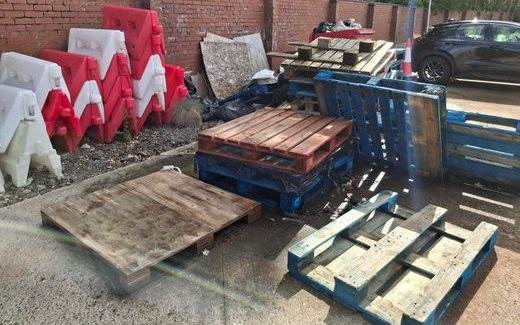
Sustainable waste disposal means dealing with rubbish in a way that keeps as much as possible in use and as little as possible in the ground. The advantages reach well beyond the environment: it supports local charities and communities, helps businesses and households stay on the right side of the law, and can reduce costs. For Scotland, where landfill is being phased out for many types of waste, it is quickly becoming the only sensible way to work. Our waste disposal and recycling service shows how we put this into practice at our Glasgow depot.
Where Scotland stands today
According to SEPA, Scotland's household recycling rate was 44.3% in 2024, and each person produced about 0.42 tonnes of household waste over the year. That means more than half of household waste is still not being recycled, so there is plenty of room to improve.
The law is moving in the same direction. A ban on sending biodegradable municipal waste to landfill came into law on 1 January 2026, although SEPA will not enforce it until 1 January 2028, under conditions, because the treatment capacity needed is not yet in place. Either way, the message is clear: waste that can be recovered should not be buried.
The waste hierarchy: a simple way to think about it
Sustainable disposal follows the waste hierarchy, which ranks options from best to worst for the environment:
- Reduce. The best waste is the waste never created. Buy less, buy better and repair what you can.
- Reuse. Pass on items that still have life in them, through charities, community groups, friends or resale.
- Recycle. Separate materials such as metal, wood, paper, card, glass, plastics, textiles and electricals so they can be made into something new.
- Recover. Where something cannot be reused or recycled, energy can sometimes be recovered from it.
- Dispose. Landfill is the last resort, for the small amount left after every other option has been used.
Every decision about an unwanted sofa, a box of old paperwork or a broken appliance can be measured against that list.
The environmental advantages
- Less landfill. Keeping waste out of landfill reduces the problems that come with it, from pollution risks to the loss of land.
- Fewer new raw materials. Recycling metal, paper, wood and plastics means less needs to be extracted and manufactured from scratch, which saves energy.
- Safe handling of problem items. Some waste needs special treatment. Fridges and freezers go to approved treatment facilities where gases and foam blowing agents are captured, and upholstered domestic seating such as sofas and armchairs may contain persistent organic pollutants, so in Scotland it must be incinerated rather than landfilled.
- A circular economy. Reusing and repurposing items keeps materials in use for longer instead of making something new every time.
The community advantages
Sustainable disposal is not only about recycling. Good furniture, household items and clothing passed on through charities and reuse projects can make a real difference to families setting up home or going through a difficult time. Glasgow and other Scottish councils point residents to Zero Waste Scotland's national reuse tool to find organisations that will take good furniture. Repair, reuse and recycling also support local jobs.
The cost and legal advantages
Responsible disposal protects you as well as the environment. Householders and businesses in Scotland have a duty of care to give their waste only to an authorised person, such as a waste carrier registered with SEPA. If you pay someone who is not authorised and your waste ends up fly-tipped, you can be held responsible. The fixed penalty for fly-tipping in Scotland rose from £200 to £500 on 1 January 2024, and on conviction the fine can reach £40,000, with imprisonment possible. Our guide to fly-tipping and the law explains this in more detail.
For businesses, sorting waste properly is also a legal requirement: glass, metal, plastic, paper and card must be presented for separate collection. Reusing furniture rather than replacing it, and selling or donating items in good condition, can also reduce what you spend on new equipment.
How to choose a sustainable waste partner
If you are paying someone to take your waste away, ask a few simple questions before you book:
- Are you a registered waste carrier? (Then check the answer on the SEPA public register.)
- Where does the waste go, and is it sorted for recycling?
- What happens to furniture and items in good condition?
- Will I receive paperwork once the job is complete?
A firm that cannot answer clearly is a risk to you and to the environment.
How Jettison Express handles your waste
At Jettison Express we follow the same approach on every job, whether it is a house clearance in Glasgow, an office clearance or a smaller junk removal visit. Everything we collect goes back to our depot to be sorted for recycling, and items in good condition are passed on for reuse where possible. Our recycling rate is over 90%, and we hold ISO 14001:2015 accreditation for environmental management.
If you would like to see the journey your items take, read what happens to your unwanted items after a house clearance. For everyday tips you can use at home, see our advice on reducing waste and recycling.
Want your waste dealt with responsibly? Get in touch with Jettison Express for a free quote, or call 0333 880 6800.
Frequently asked questions
What is sustainable waste disposal?
It means dealing with waste in the most environmentally responsible way available, following the waste hierarchy: reduce, reuse, recycle, recover and, only as a last resort, dispose. In practice, it means sorting waste so good items are reused, materials are recycled and as little as possible goes to landfill.
What is Scotland's recycling rate?
According to SEPA, Scotland's household recycling rate was 44.3% in 2024, and each person produced about 0.42 tonnes of household waste. That leaves plenty of room for improvement, which is why reuse, better sorting and responsible clearance companies all matter.
Is landfill being banned in Scotland?
A ban on sending biodegradable municipal waste to landfill came into law on 1 January 2026. SEPA will not enforce it until 1 January 2028, under conditions, because the treatment capacity needed is not yet in place. Other wastes, such as most tyres, are already banned from landfill.
How much of the waste Jettison Express collects is recycled?
Our recycling rate is over 90%. Everything we collect is taken to our depot and sorted, so items in good condition can be reused where possible and materials such as metal, wood and electricals go to the right recycling routes.