
A house clearance service removes the contents of a property, from a single room to an entire house, and deals with everything legally and responsibly. A good clearance team agrees a price up front, takes away only what you want gone, dismantles and carries out heavy items, sorts everything for reuse and recycling, and leaves the property empty and swept.
It is different from a removal service. Removers move your belongings to a new home. A clearance company takes away the things nobody needs any more and makes sure they end up in the right place. Below we walk through what happens at each stage, what is included, what is not and where your items go afterwards.
When people use a house clearance service
- After a bereavement: families and solicitors clearing a loved one's home as part of an executry.
- Moving or downsizing: when furniture will not fit the new home or is not worth moving.
- Between tenancies: landlords and letting agents clearing items left behind by a tenant.
- Before a sale: estate agents and sellers who need an empty property for viewings or entry.
- Overfilled homes: lofts, spare rooms, garages and sheds that have become unmanageable.
What happens, step by step
1. Getting a quote
It starts with a conversation. You describe the property, how full it is and what needs to go. Photographs or a short video of each room help the company see the volume and type of items, along with details such as stairs, lifts and parking. A reputable firm will give you a clear, up-front price and tell you about anything that cannot be included.
2. Agreeing what stays and what goes
Before the day, decide what you are keeping. The simplest approach is to move keep items into one room, or label them clearly, so the team knows exactly what to leave. Our guide to preparing your home for a clearance team has a full checklist, including what to do with paperwork and valuables.
3. Clearance day
The team arrives with a suitable vehicle and the tools to take large items apart. Typical work on the day includes:
- carrying out furniture, beds, mattresses and appliances
- dismantling wardrobes, bed frames and units that will not fit through doors or round landings
- lifting carpets, underlay and other flooring
- bagging loose contents from cupboards, drawers and lofts
- clearing garages, sheds and gardens if they are part of the job
4. Sorting and disposal
Everything collected is taken away and sorted. Items in good condition can be passed on for reuse, and materials such as metal, wood, cardboard and textiles are separated for recycling. Electrical items go for specialist treatment, and fridges and freezers go to approved facilities where the gases and foam blowing agents are captured.
5. Final sweep and paperwork
Once the property is empty, the cleared areas are swept and tidied. You should receive paperwork confirming the work, which is especially useful for executors, solicitors and landlords who need a record.
What is included and what is not
A standard house clearance covers most household contents:
- furniture, including sofas, armchairs, beds and wardrobes
- mattresses, bedding, clothes and other textiles
- white goods and small electrical items
- carpets and flooring
- kitchenware, ornaments, books and general household items
- loft, garage, shed and garden contents
Some things are usually excluded, and it is worth knowing in advance:
- Asbestos. Sheds, garages and outbuildings built before 2000 can contain asbestos cement roofing or panels. Do not break or cut it. Use a licensed asbestos contractor or ask the council about disposal.
- Hazardous waste. Chemicals, solvents, gas bottles and similar items need specialist handling. Set them aside and check with the council where to take them.
- Deep cleaning. A clearance normally ends with a sweep and tidy, not a full clean. If the property needs cleaning for sale or handover, arrange that separately.
Where your items go afterwards
A responsible clearance company tries to keep as much as possible out of landfill. In Scotland there are also specific rules for certain items. Upholstered seating, such as sofas, sofa beds and armchairs, may contain persistent organic pollutants (POPs), so it must be incinerated rather than landfilled and must not be torn up or mixed with other waste. Most tyres are banned from landfill. Fridges and air conditioning units need their gases recovered safely.
We explain the full journey in our post on what happens to your unwanted items after a house clearance.
Your legal responsibility
Under the duty of care in Scotland, householders must only give their waste to an authorised person, such as a waste carrier registered with SEPA. If you pay someone who is not authorised and your waste is fly-tipped, you can be held responsible. The fixed penalty for fly-tipping in Scotland is £500, and fines on conviction can reach £40,000.
That is why it pays to check any company on SEPA's public register of waste carriers before you book. Our list of questions to ask a house clearance company covers the other checks worth making.
How Jettison Express can help
Jettison Express is a Glasgow-based clearance and waste management company with over 65 combined years of industry experience and more than 780 completed projects. We carry out full and partial house clearances across central Scotland, including house clearances in Glasgow, Edinburgh, Stirling, Perth and Dundee.
- Up-front rates and a team that calls ahead when they are on their way
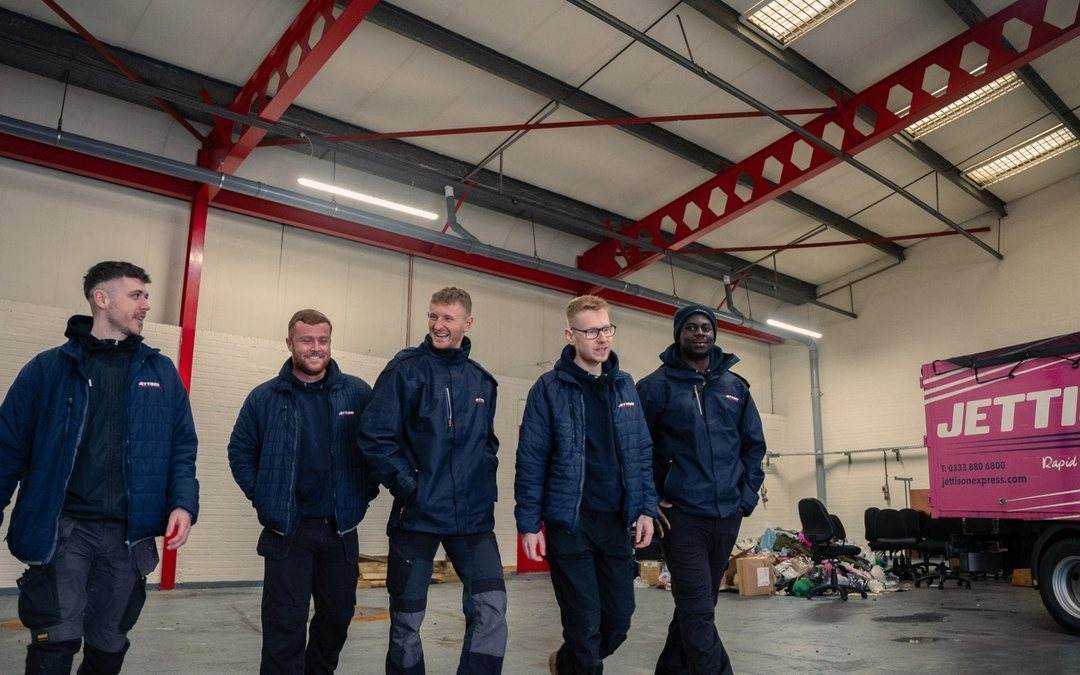
- Friendly, uniformed staff who dismantle larger furniture and lift carpets and flooring
- Removal of all non-hazardous waste types, sorted at our depot with over 90% recycled
- A final sweep and tidy, with paperwork left once the job is complete
Not every job needs a full clearance. For a handful of bulky items, our junk removal service may suit you better, and we also handle garage clearances in Glasgow.
To find out what your clearance would involve, contact Jettison Express for a quote or call 0333 880 6800, Monday to Friday, 8am to 6pm.
Frequently asked questions
Is a house clearance the same as a removal?
No. A removal company moves your belongings from one address to another. A house clearance company takes away the items you no longer want, then sorts them for reuse, recycling or disposal. Some people use both: removers for the things they are keeping and a clearance team for everything else.
Does a house clearance include cleaning?
A clearance usually finishes with a sweep and tidy of the cleared areas, not a deep clean. Jettison Express leaves the property swept and tidy once everything has been removed. If you need a full clean for a sale or the end of a tenancy, book a cleaning company separately once the clearance is done.
Will a house clearance company take my old sofa?
Yes, a licensed clearance company can take sofas, armchairs and other upholstered seating. In Scotland this furniture may contain persistent organic pollutants, so it must be incinerated rather than landfilled and must not be torn up or mixed with other waste. A reputable firm will make sure it goes down the correct route.
What will a house clearance company not take?
Many companies will not take asbestos or hazardous waste such as chemicals, solvents and gas bottles. Jettison Express removes non-hazardous waste only. If you suspect asbestos, for example in an old shed roof, do not break it up. Contact a licensed asbestos contractor or ask the council about disposal.