
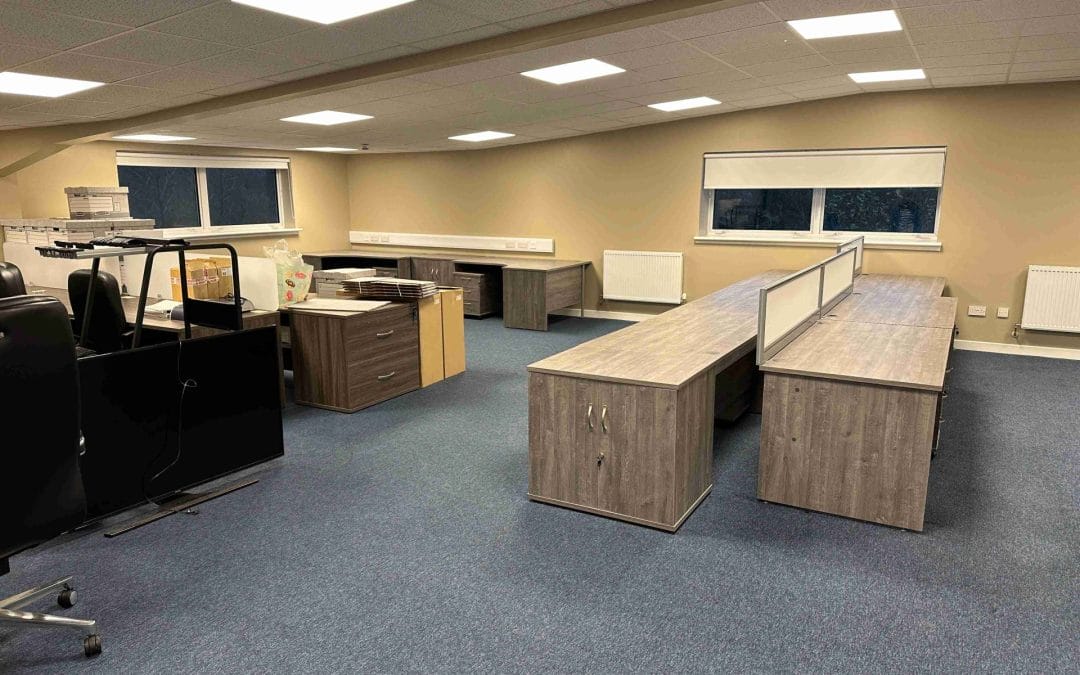
An organised workspace helps people concentrate, keeps the office safer and makes better use of space you are already paying for. Clutter builds up quietly in every business: broken chairs in a corner, boxes of old files under desks, monitors nobody uses and a store cupboard that no longer closes. Clearing it out on a regular basis is one of the simplest ways to improve how an office feels and works.
This article looks at why a clear office matters, how to keep it that way, and when it makes sense to bring in an office clearance team in Glasgow or elsewhere in Scotland.
Why an organised workspace matters
Focus and productivity
It is hard to concentrate when your desk is buried. Time spent hunting for a document, a charger or a free meeting room adds up across a team every week. When there is a clear place for everything and nothing unnecessary in the way, people can get on with their work.
Health and safety
Clutter is not just untidy, it can be a hazard. Boxes stacked in corridors, cables trailing across the floor and broken furniture left in a corner create trip risks. Overfilled storage rooms and blocked routes to fire exits are exactly what a fire risk assessment is designed to pick up. Keeping walkways and exits clear is basic good practice for any employer.
Wellbeing and morale
A cramped, cluttered office can feel oppressive, particularly in smaller premises. A tidy, well-organised space feels calmer and more welcoming, both for staff and for visitors. It also sends a message that the business takes care of its people and its premises.
Making the most of your space
Office space is expensive. Every square metre filled with unused furniture or archive boxes is space you are paying for without getting any value. Clearing it can free up room for a quiet area, an extra meeting space or simply a less crowded layout.
Making space for hybrid working
Many offices in Scotland were laid out for a time when everyone was in five days a week. With more staff now splitting their time between home and the office, rows of fixed desks often sit empty while there is a shortage of places to meet and collaborate. A clear-out is usually the first step in redesigning the space: removing surplus desks and pedestals, opening up areas for team working and introducing shared desks with simple, tidy storage.
If the change is bigger and you are relocating or downsizing, our guide to planning an office move includes a week by week timeline.
Build regular clear-outs into the year
The easiest way to stay organised is to never let clutter build up in the first place. A few habits make a big difference:
- Schedule a clear-out. Once or twice a year, set aside time for every team to go through desks, shelves and shared storage.
- Give everything a home. Shelving, wall-mounted file holders and lockable cabinets keep essentials close and floors clear.
- Deal with broken items promptly. A damaged chair left in a corner tends to stay there for months.
- Go paperless where you can. Scanning and digital filing reduce the volume of paper that needs storing in the first place.
- Clear the kitchen and shared spaces. Old appliances, mugs and supplies accumulate in communal areas faster than anywhere else.
Archiving and confidential waste
Paper records are often the biggest source of office clutter. Review them methodically: decide what you are required to keep, what can be archived off-site or digitally, and what can be destroyed. Anything containing personal, financial or commercially sensitive information must be handled securely. Under UK GDPR, organisations must keep personal data secure, and that includes when it is thrown away.
BS EN 15713 is the code of practice for the secure destruction of confidential material. Rather than shredding sacks of paper in-house, which takes hours of staff time, use a confidential waste disposal service that follows it.
The same applies to old IT. Computers, laptops and phones can hold personal data long after they are switched off for good. Hard drives should be securely wiped or physically destroyed, with a certificate as proof, and our hard drive and IT disposal service takes care of that for you.
Doing it yourself versus calling in help
A small clear-out can be handled in-house. Sort items into keep, reuse, recycle and dispose, and separate paper, card, plastics, metal and glass, because businesses in Scotland must present these for separate collection. Remember that your business has a duty of care for its waste, so it can only be passed to an authorised person, such as a waste carrier registered with SEPA, with a waste transfer note.
Larger jobs are a different matter. Moving desks, cabinets and partitions takes several people, the right vehicle and proper disposal routes for each type of waste. That is where a professional clearance makes sense, and our step by step guide to the office clearance process explains what to expect.
How Jettison Express can help
Jettison Express clears offices, storerooms and business premises across central Scotland, whether you need a one-off clear-out or a full strip-out. Our friendly, uniformed team will dismantle larger furniture, carry everything out, and finish with a sweep and tidy. We take items back to our depot to be sorted for recycling, with a recycling rate of over 90%, and leave the paperwork with you once the job is done. For smaller loads, such as a few broken chairs or a cupboard of old equipment, our junk removal service may be the better fit.
We are ISO 9001:2015 and ISO 14001:2015 accredited and SafeContractor approved. We handle non-hazardous waste only, so we will flag anything that needs a specialist.
Ready to reclaim your office? Contact Jettison Express for a free quote, or call our team on 0333 880 6800.
Frequently asked questions
How often should an office be cleared out?
Most offices benefit from a thorough clear-out once or twice a year, with a quick tidy of shared areas more often. A larger clearance makes sense before a move, a refit, a change to hybrid working or whenever storage areas start to fill with broken furniture, old equipment and archive boxes.
How should we dispose of old confidential files?
Do not put them in general waste or loose recycling. Decide what you must keep, then have the rest securely destroyed by a provider that follows BS EN 15713, the code of practice for secure destruction of confidential material. Keep files in locked consoles or sealed sacks until they are collected.
Can old office furniture be recycled?
Much of it can. Good furniture can be reused by staff, charities or buyers, and metal, wood and other materials can be recycled. Jettison Express takes cleared items to our depot to be sorted for recycling, and our recycling rate is over 90%.
Does my business need paperwork when it gets rid of office waste?
Yes. Businesses in Scotland have a duty of care for their waste. You must only give it to an authorised person, such as a waste carrier registered with SEPA, keep it contained and complete a waste transfer note. You can check any carrier on the SEPA public register before booking.