
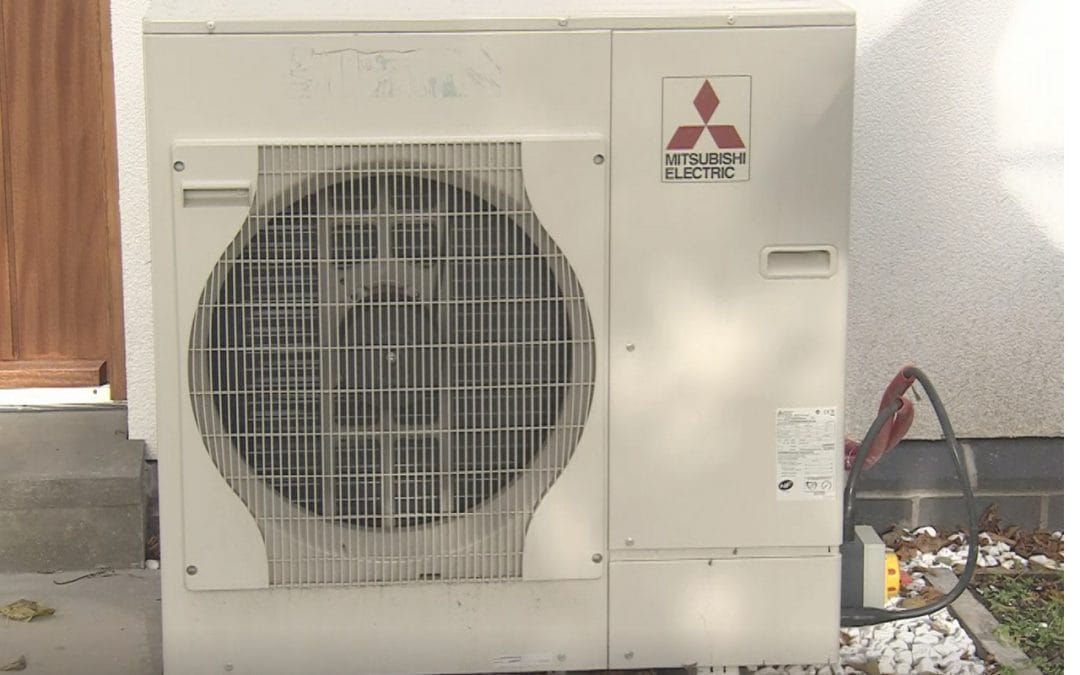
Old air conditioning equipment cannot be treated like ordinary rubbish. Most units contain refrigerant gas, and fixed systems need that gas recovered by a technician qualified to work with F-gas before the equipment is taken out and scrapped. Once a fixed system has been safely decommissioned, or if you only have a portable unit or a fan, getting rid of it is far more straightforward. This guide explains the difference, what the law expects, and what Jettison Express can collect from homes and businesses across Glasgow and central Scotland.
Fans, portable units and fixed systems: why the type matters
Air conditioning is still much less common in Scottish homes than in warmer countries, but portable units bought for a warm spell, wall-mounted systems in conservatories and offices, and larger commercial plant all reach the end of their working life eventually. How you dispose of them depends on what you have.
Fans
A desk, tower or pedestal fan has no refrigerant. It is a standard electrical item, so recycle it at a household waste recycling centre or include it in a collection with your other unwanted things. It should never go in your general waste bin.
Portable air conditioners
Portable units, the type on wheels with a hose out of the window, have a sealed refrigerant circuit inside, a little like a fridge. Because the gas is sealed in, the unit can be moved and taken for recycling in one piece, and the gas is recovered when it is treated. The important thing is to keep it intact. Do not take it apart, cut pipes or remove the compressor for scrap, as that releases the gas.
Fixed and split systems
Wall-mounted split systems, ceiling cassettes and larger commercial units are connected by pipework that carries refrigerant between an indoor unit and an outdoor condenser. That gas must be recovered by a qualified F-gas technician before the system is disconnected and scrapped. Releasing F-gas is illegal, so this is not a DIY job, and it is not a job for a general removal team either. The same rule applies to heat pumps and commercial refrigeration.
What the law says about F-gas
Refrigerant gases in air conditioning units, heat pumps and commercial refrigeration must be recovered by a technician qualified to work with F-gas before the equipment is scrapped. The government guidance on recovering F-gas when disposing of equipment sets out the rules. In practice, if you are removing a fixed system:
- book an air conditioning engineer who is qualified to work with F-gas to decommission it;
- ask them to confirm in writing that the refrigerant has been recovered;
- keep that record with your other paperwork, especially if you are a business or a landlord.
Once the gas has been recovered, the indoor and outdoor units, wall brackets, trunking and redundant pipework are electrical and metal waste that a registered waste carrier can collect. On larger refurbishments we remove this equipment as part of a soft strip, once your F-gas engineer has made it safe.
Can I take an air conditioner to the tip?
If you live in Glasgow, you can take a household portable unit or fan to the council recycling centres at Dawsholm, Polmadie or Shieldhall, which accept electricals and white goods. They are open 8am to 6pm, seven days a week, with no booking, but they are for residents only. Easter Queenslie closed for redevelopment from April 2026, and vans are only accepted at Shieldhall and Dawsholm at set times. Tell site staff that a portable unit contains refrigerant so that it goes in the right place.
If you are replacing a portable unit, shops that sell electrical goods must take back an old item of the same type when you buy a new one, giving you at least 28 days to bring it in. Air conditioning equipment from a business cannot go to a council recycling centre, which is another reason commercial units are usually handled as part of a wider clearance.
Air conditioning in office strip-outs and refurbishments
Offices, shops and other commercial premises usually deal with old air conditioning during a refurbishment, a move or at the end of a lease. The work tends to follow the same order:
- An engineer qualified to work with F-gas recovers the refrigerant and decommissions the system.
- The units are disconnected and taken down by the engineer or your fit-out contractor.
- A registered waste carrier collects the decommissioned units along with furniture, IT equipment and other waste from the strip-out.
- You receive waste transfer notes for your records.
Businesses in Scotland have a duty of care for their waste. You must only hand it to an authorised person, such as a waste carrier registered with SEPA, complete waste transfer notes and keep waste contained until it is collected. NetRegs explains the duties for businesses in Scotland in more detail. If you are planning a larger project, our office clearance service in Glasgow can take everything at once, and our step-by-step guide to the office clearance process shows how a clearance is planned from survey to final sweep.
Why recycling old air conditioning matters
An air conditioning unit is mostly metal casing, pipework and electrical components, all of which can be recovered and recycled once the refrigerant has been dealt with properly. Sending equipment to the right place keeps harmful gases out of the atmosphere and keeps useful materials in use. It also protects you: if equipment you paid someone to remove is dumped and they were not authorised, you can be held responsible.
How Jettison Express can help
F-gas recovery is a job for a qualified technician, so we work after that step. Once your fixed system has been safely decommissioned, Jettison Express can collect the units and associated waste. We also take portable air conditioners, fans and dehumidifiers from homes through our junk removal service, and we handle commercial jobs of every size through our office clearances across Scotland.
- We are a registered waste carrier, and you can check us on the SEPA register.
- We hold ISO 14001:2015 environmental and ISO 9001:2015 quality accreditations and are SafeContractor approved.
- Our uniformed team call ahead, do all the lifting and finish with a sweep of the cleared area.
- Everything goes to our depot to be sorted for recycling, and we recycle over 90% of what we collect.
- You receive paperwork once the job is complete.
Clearing out other appliances at the same time? Our guides to disposing of a fridge responsibly and getting rid of old household appliances cover the rest of the house.
To arrange a collection of decommissioned air conditioning equipment, contact Jettison Express or call 0333 880 6800, Monday to Friday 8am to 6pm.
Frequently asked questions
Can I remove the gas from an air conditioning unit myself?
No. Refrigerant gases in air conditioning units, heat pumps and commercial refrigeration must be recovered by a technician qualified to work with F-gas before the equipment is scrapped, and releasing F-gas is illegal. Book a qualified air conditioning engineer to decommission a fixed system, and keep portable units intact so the gas can be recovered when they are recycled.
Can I put a portable air conditioner in the bin or a skip?
No. A portable air conditioner is electrical waste with a sealed refrigerant circuit, so it needs to be recycled through the right route. Glasgow residents can take one to a household waste recycling centre, return it to a retailer when buying a replacement of the same type, or have it collected by a registered waste carrier such as Jettison Express.
What paperwork should a business keep when disposing of air conditioning?
Businesses in Scotland must complete waste transfer notes when they hand waste to an authorised person, such as a waste carrier registered with SEPA. It is also sensible to ask your F-gas qualified engineer to confirm in writing that the refrigerant has been recovered, and to keep both records together in case you are ever asked how the equipment was disposed of.
Will you collect air conditioning units from an office?
Yes, once the system has been safely decommissioned and the refrigerant recovered by an engineer qualified to work with F-gas. Jettison Express can then collect the indoor and outdoor units, brackets and trunking, often alongside furniture, IT equipment and other waste from an office strip-out, and leave you with paperwork once the job is complete.