
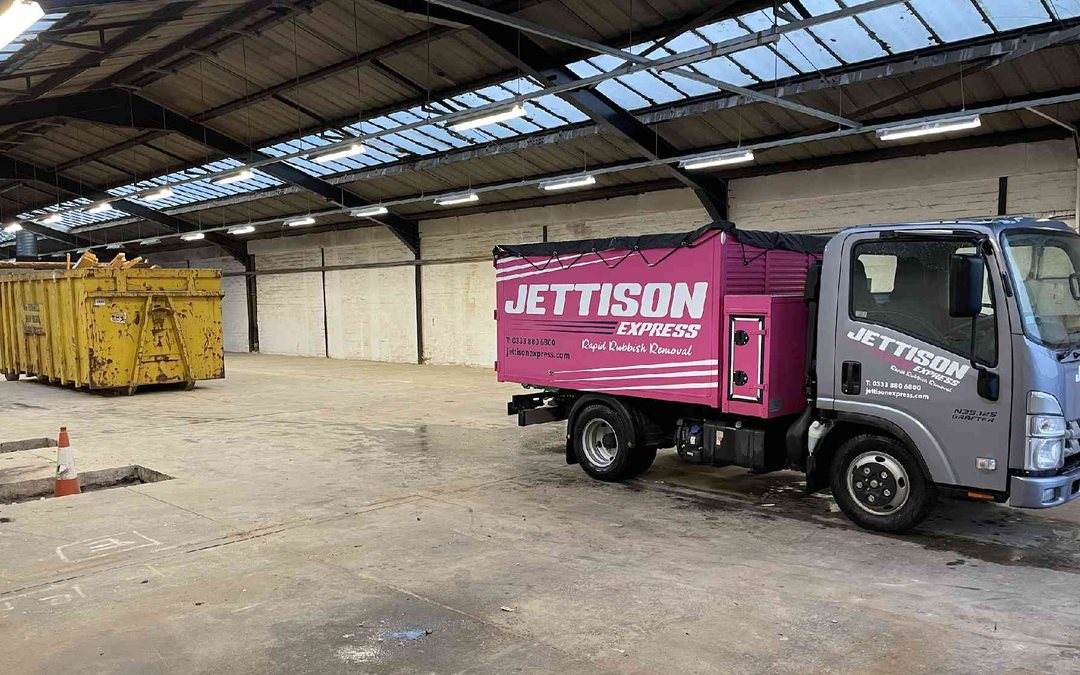
When Jettison Express clears a house, everything we remove goes back to our depot to be sorted. Items in good condition are passed on for reuse where possible, materials such as metal, wood, textiles and electricals are separated into recycling streams, upholstered seating is sent for incineration under Scotland's POPs rules, and only a small share is left for disposal. Our recycling rate is over 90%.
Whether you are downsizing, moving or dealing with a loved one's estate, it is natural to wonder where a lifetime of belongings ends up. Here is the journey, step by step.
Step 1: Deciding what stays
The journey starts before anything leaves the house. Set aside everything you want to keep, including paperwork, photographs, jewellery and sentimental items, and tell the team what is staying. Once the clearance begins, our crew dismantles larger furniture, lifts carpets and flooring, carries everything out and loads the van. We finish with a sweep and tidy and leave paperwork once the job is complete. For the full process from quote to final sweep, see what a house clearance service involves.
Step 2: Sorting at our depot
Back at the depot, the load is sorted by type and condition. This is the step that makes the difference. A skip or an unregistered collector sends everything off mixed, but sorting means each item can go to the route that suits it best, rather than everything being treated as general waste.
Step 3: Reuse and charity
Reuse is the best outcome for anything still in good condition, because the item keeps its value and nothing new has to be made to replace it. Furniture, kitchenware, books, ornaments and household goods that are clean and usable can find a second home through charities and reuse organisations.
If you would like to pass on good furniture yourself before a clearance, Glasgow City Council and other Scottish councils point residents to Zero Waste Scotland's national reuse tool, which helps you find organisations that collect.
Step 4: Recycling streams
Items that cannot be reused are broken down into their materials.
Metal
Bed frames, filing cabinets, garden tools, bikes, pans and radiators are separated as scrap metal, which can be melted down and made into new products.
Wood
Wardrobes, tables, chests of drawers and flat-pack units are separated as waste wood. Clean and treated timber need different recycling routes, which is one reason treated wood should never be burned at home.
Textiles
Clothes, curtains, bedding and towels are sorted so wearable items can be reused and worn fabrics can be recycled. Our post on whether clearance companies take clothes explains this in more detail.
Electricals and white goods
Televisions, microwaves, washing machines and small appliances are electrical waste and need to be recycled properly. Fridges and freezers go to approved treatment facilities where the refrigerant gases and foam blowing agents are captured, so they are not released into the air.
Cardboard, paper, plastics and glass
Boxes, packaging, old magazines, bottles and jars are separated into their own streams. Any personal paperwork should be removed beforehand, or handled as confidential waste.
Mattresses and carpets
These bulky items are among the hardest to deal with. Around 4.75 million mattresses a year in the UK go to landfill or incineration, according to the National Bed Federation, and the UK generates around 400,000 tonnes of carpet waste a year. Sorting them out of the general load gives them the best chance of going to a suitable outlet.
Step 5: Sofas, armchairs and the POPs rules
Upholstered seating has its own rules in Scotland. Sofas, sofa beds, armchairs and any seating containing foam, fabric, leather or synthetic leather may contain persistent organic pollutants (POPs), chemicals that do not break down easily in the environment. Once this seating becomes waste, it must be incinerated rather than landfilled, and it must not be torn up or mixed with other waste. SEPA began enforcing this on 31 January 2024. Mattresses are not part of this rule.
In practice, that means a sofa from your living room is kept apart from the rest of the load. If your sofa is still in good condition, offering it for reuse before the clearance is the better option.
Step 6: The small share that is left
After reuse and recycling, a small residual share remains: broken items made of mixed materials, contaminated waste and things with no recycling route. This goes to licensed disposal facilities. Sending less to landfill is becoming more important in Scotland. The ban on sending biodegradable municipal waste to landfill has been in law since 1 January 2026, although SEPA will not enforce it until 1 January 2028 under certain conditions.
For context, Scotland's household recycling rate was 44.3% in 2024, according to SEPA. Sorting every load is how a clearance company can do much better than that. You can read more about why it matters in our post on the advantages of sustainable waste disposal.
Why this matters to you
Under Scotland's duty of care, your waste remains your responsibility until it is handed to an authorised person, such as a waste carrier registered with SEPA. Choosing a registered company that can tell you exactly where your belongings go protects you from the risk of them being fly-tipped, and gives you peace of mind that a loved one's possessions have been treated with respect.
How Jettison Express can help
Jettison Express is a Glasgow based clearance company that works across central Scotland, helping families, solicitors handling executry clearances, estate agents and landlords. We are accredited to ISO 14001:2015 for environmental management, and every load we collect is sorted at our depot. Find out more about our house clearances in Glasgow or, for smaller loads, our junk removal service. For larger commercial jobs, see our office clearance service.
To arrange a clearance, contact our team or call 0333 880 6800, Monday to Friday, 8am to 6pm.
Frequently asked questions
How much of a house clearance is recycled?
It depends on the company. At Jettison Express, everything we collect is taken back to our depot and sorted, and our recycling rate is over 90%. Before you book any clearance company, ask what happens to the waste and how much of it is recycled, and check that the company appears on SEPA's public register of waste carriers.
Do house clearance companies give items to charity?
Many do pass on good items for reuse. Clean, usable furniture and household goods can go to charities and reuse organisations, which is the best outcome for anything still in good condition. If you want to choose the charity yourself, set those items aside before the clearance, or use Zero Waste Scotland's national reuse tool to find a local organisation.
What happens to a sofa after a house clearance in Scotland?
Waste sofas, armchairs and other upholstered seating may contain persistent organic pollutants, so in Scotland they must be incinerated rather than landfilled, and they must not be torn up or mixed with other waste. SEPA began enforcing this on 31 January 2024. A sofa in good condition can be offered for reuse before it becomes waste.
Can I keep some items from a house clearance?
Yes. Before the team arrives, set aside anything you want to keep, such as photographs, documents, jewellery and sentimental items, ideally in a separate room. Let the team know what is staying when they arrive. Everything else is removed and taken to our depot for sorting.