
To get rid of a piano in Glasgow, first ask a piano tuner or technician whether it is worth anything, because most old uprights have little resale value but a few do. If it is playable, offer it to the Glasgow Piano Project, a school, church or community group, or someone local who will collect it. If nobody wants it, book a registered waste carrier with enough people to move it safely, so its wood, metal frame and strings can be separated and recycled.
Pianos come up more often than you might expect during house clearances in Glasgow. Many family homes have an upright that nobody has played for years, and it is often the last big item left when a parent's house is being emptied. Pianos are heavy, awkward and surprisingly hard to give away, so a little planning saves a lot of frustration. If the piano is the only large item going, a bulky uplift may be all you need.
How do I get rid of a piano in Glasgow?
Work through these options in order:
- Find out what it is worth. An honest opinion from a tuner or technician tells you whether to sell it, give it away or let it go.
- Sell it or offer it to a player. A pianist, student or family with children learning may be glad of a sound instrument.
- Donate it. The Glasgow Piano Project, schools, churches and community groups sometimes take pianos.
- Have it removed and recycled. If it cannot be played or nobody wants it, a registered waste carrier can take it away for the materials to be recycled.
Is my old piano worth anything?
Honestly, most old upright pianos have little or no resale value. That can be hard to hear when a piano has been in the family for decades.
Some pianos are still worth selling, though, usually when they:
- were made by a well known maker (the name is normally on the fallboard above the keys);
- are in good condition, with no split wood, sticking keys or broken strings;
- have been tuned recently and still hold their tune.
The best way to know is to ask a piano tuner or technician to look at it. They can tell you whether it is worth selling, whether it could be tuned and played again, and whether repairs would cost more than the piano is worth. Write down the maker's name and any serial number, and take photos, before you ask.
If the piano belonged to someone who has died
In Scotland, the piano is part of the estate. The executor decides what happens to it, and anything of value may need to be listed in the inventory of the estate when applying for confirmation, so a valuable piano may need valuing first. Do not sell or give it away until the executor has agreed. Our guide to executry clearances explains how this works.
Where can you donate a piano in Glasgow?
The Glasgow Piano Project
Glasgow Piano Project CIC is a social enterprise that redistributes donated pianos back into the community. Its pianos have gone into public places and into hospitals, sheltered accommodation, care homes, cafes, community groups, schools and galleries. It also recycles older, unplayable pianos into new furniture and artwork. Search for the Glasgow Piano Project online and contact them first, with photos and details of the piano and the access, rather than arranging a move before they have agreed.
Schools, churches and community groups
A local school, church, choir, nursery or community centre may welcome a piano, but always ask first. They will want to know the maker, its condition, when it was last tuned and how easy it is to get out of your home. Many will not have a budget for moving it, so be ready to help arrange that.
Friends, neighbours and online listings
Offering a piano free to anyone who collects it often works for a playable instrument. Be honest about its condition and the stairs, and make sure the person collecting brings enough people. Zero Waste Scotland's reuse search tool can also help you find organisations near you that pass items on.
Will a charity take a piano?
Most charity shops and furniture charities will not take pianos. The weight, and the space a piano takes up on a shop floor, make them very difficult for most charities to handle, so expect a polite no. It is still worth asking, but have a backup plan. The piano stool, sheet music and music books are much easier to pass on than the piano itself.
How heavy is an upright piano?
Upright pianos commonly weigh somewhere around 150 to 300 kilograms, depending on their size and age. Grand pianos are a different job again, and are usually best left to a specialist piano mover.
Why the weight matters on a tenement stair
Moving a piano across a flat floor is hard enough. Taking one down a Glasgow common stair, with stone steps and a turn at every half landing, needs a properly planned team. Our guide on clearing a tenement flat in Glasgow covers stairs, neighbours and parking. And never leave a piano in the close while you work out the next step: the Scottish Fire and Rescue Service advises keeping closes clear, because the common stair is often the only way out in a fire.
Safety tips for moving a piano
- Never try to move a piano with too few people. If you are unsure, stop.
- Do not rely on the small castors to roll it across a room or over a threshold.
- Close and secure the lid and the keyboard cover before lifting.
- Clear the whole route and measure the doors, corners and turns.
- Protect floors, carpets, banisters and stairs with blankets or boards.
- Keep children and pets well out of the way.
Can a piano be recycled?
Yes. A piano is mostly wood and metal. Once it is taken apart, the wood, the metal frame and the strings can be separated and recycled. Some unplayable pianos are also given a second life as furniture or artwork, which is part of what the Glasgow Piano Project does. When you book a removal, ask what will happen to the piano, and read more about what happens to unwanted items after a clearance.
A padded piano stool or bench is seating with foam and fabric. If it is being thrown away rather than reused, it falls under the same Scottish rules as a sofa: it must be kept whole, not torn up or mixed with other waste, and sent for incineration.
However you dispose of it, never leave a piano on the pavement or in the back court. That can be treated as fly-tipping, which carries a £500 fixed penalty in Scotland. Only give it to an authorised person, such as a waste transporter registered with SEPA, which you can check on SEPA's public register. If an unregistered collector dumps it, you can be held responsible.
Before the piano goes: a checklist
- Look inside the lid, under the keyboard and in the stool for sheet music, letters, photos and money.
- Note the maker's name and serial number and take photos.
- Get an honest opinion on its value from a tuner or technician.
- If it is part of an estate, get the executor's agreement.
- Measure the route out, including every turn on the stair.
- Tell your neighbours if it will be carried down a shared stair.
- Mention the piano, the floor level and any stairs when asking for quotes.
How Jettison Express can help
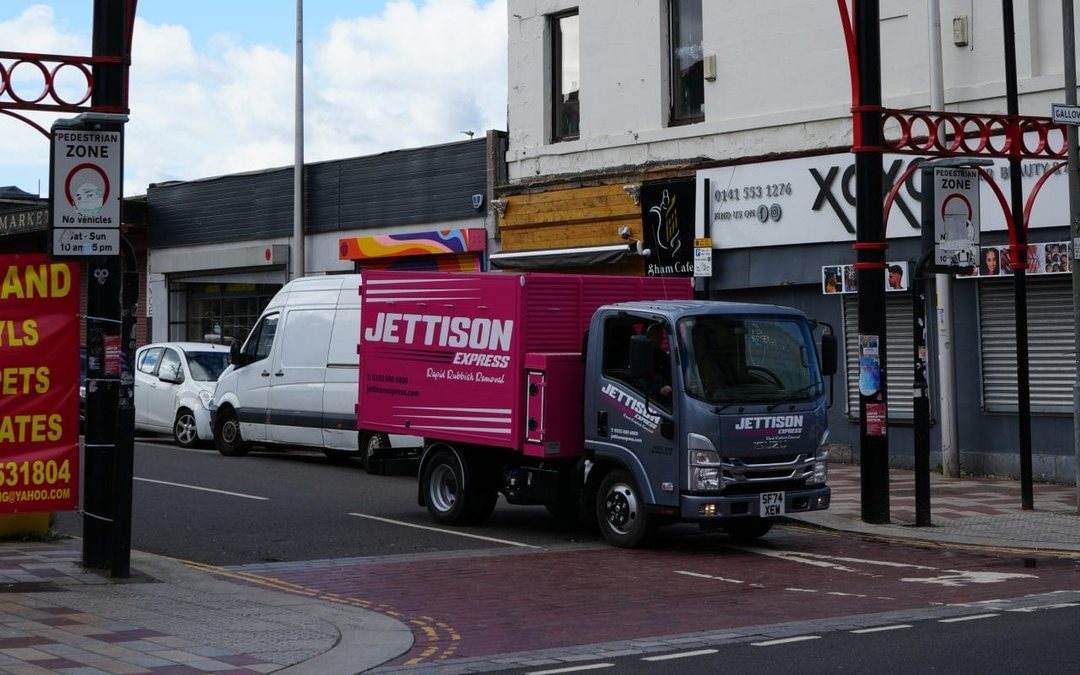
Jettison Express is a clearance company rather than a specialist piano mover. If your piano is valuable, or you want it moved intact to a new home, a specialist piano mover is the better choice. If the piano is going as part of a junk removal or a full clearance, mention it when you ask for a quote, with the floor and stair details, so the right team can be booked.
We give you an up-front rate before any work starts and call ahead on the day. Our uniformed, insured team dismantles furniture, lifts carpets, and sweeps and tidies at the end. Everything comes back to our Glasgow depot to be sorted, with over 90% reused or recycled. We are a registered waste carrier, we leave paperwork once the job is complete, and we work with families and solicitors on executry clearances, from city tenements to family homes in Bearsden and beyond.
If you have a piano to clear, or a whole house, get in touch for a quote or call us on 0333 880 6800.
Frequently asked questions
How do I get rid of a piano in Glasgow?
Ask a piano tuner or technician whether it is worth selling. If it is playable, offer it to the Glasgow Piano Project, a school, church or community group, or someone local who will collect it. If nobody wants it, book a registered waste carrier with enough people to move it safely, so the wood, metal frame and strings can be recycled.
Is my old piano worth anything?
Most old upright pianos have little or no resale value, but some do, usually those by a well known maker, in good condition and recently tuned. The best way to find out is to ask a piano tuner or technician for an honest opinion. If the piano is part of an estate in Scotland, the executor decides what happens to it.
Where can I donate a piano in Glasgow?
Glasgow Piano Project CIC redistributes donated pianos to public places, hospitals, care homes, schools and community groups, and recycles unplayable ones into furniture and artwork. Contact them first with photos and details. Local schools, churches, choirs and community centres may also take a playable piano, but always ask before arranging a move.
Will a charity take a piano?
Most charity shops and furniture charities will not take pianos, because of their weight and the space they take up. It is worth asking, but have a backup plan. A social enterprise such as the Glasgow Piano Project, or a school or community group, is a better place to start.
Can a piano be recycled?
Yes. Once a piano is taken apart, the wood, metal frame and strings can be separated and recycled. Some unplayable pianos are turned into furniture or artwork instead. Make sure whoever removes it is a waste transporter registered with SEPA, and never leave a piano in the back court or on the street, which can be treated as fly-tipping.
How heavy is an upright piano?
Upright pianos commonly weigh somewhere around 150 to 300 kilograms, depending on their size and age. That is why moving one needs a properly planned team, especially down a tenement stair with turns at every half landing. Never try to move a piano with too few people, and protect floors, banisters and stairs.