
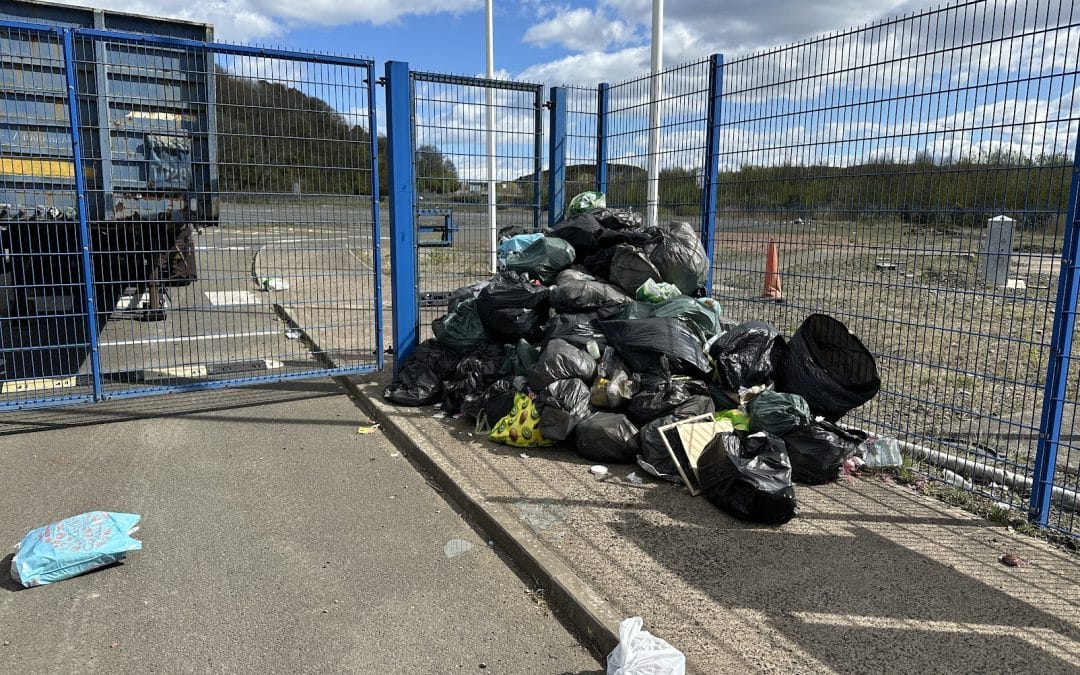
Fly-tipping is the illegal dumping of waste on land that has no licence or permission to accept it, from a bag of rubbish left at the side of the road to a van load of building waste tipped in a lane. In Scotland, the fixed penalty for fly-tipping is £500, and on conviction the fine can reach £40,000, with imprisonment possible. Householders and businesses can also be held responsible if waste they handed to an unauthorised collector ends up dumped.
This guide explains what counts as fly-tipping, the penalties, how the duty of care affects you, how to report it safely and what to do if waste has been dumped on your land.
What counts as fly-tipping?
Fly-tipping covers any waste left where it should not be. Common examples include:
- Black bags, furniture or mattresses dumped in a back court, lane or on open ground.
- Waste left next to a full communal bin or a recycling point.
- Building and garden waste tipped on farmland, in woodland or on industrial estates.
- Household items left on a street or pavement for someone else to deal with.
- Commercial waste dumped on another business's land or in a quiet lay-by.
It happens in cities and the countryside alike. Hidden spots, such as lanes, the backs of industrial units and roads with little passing traffic, are targeted most often.
Fly-tipping penalties in Scotland
Scotland has its own penalties, which differ from those in England. The Fly-tipping (Fixed Penalty) (Scotland) Order 2023 raised the fixed penalty from £200 to £500 on 1 January 2024. That is the fine you can be given on the spot without going to court.
More serious cases can be prosecuted. On conviction, the fine can reach £40,000, and imprisonment is possible. Whatever the outcome, a fly-tipping offence is a criminal matter, not a minor nuisance.
The duty of care: why it matters to householders
Many people do not realise that they can be held responsible for fly-tipping they did not do themselves. Under the duty of care, householders in Scotland must only give their waste to an authorised person, such as a waste carrier registered with SEPA or a licensed or permitted site. Businesses have the same duty and must also complete waste transfer notes and keep their waste contained.
If you pay someone who is not authorised to take your rubbish away and it is later found dumped, the waste can be traced back to you, and you can be held responsible. That is why the cheap offer from an unknown collector is such a risk. Our article on why you should avoid the white van man explains the warning signs.
Before handing over any waste:
- Ask for the collector's waste carrier registration and check it on the SEPA public register.
- Ask where the waste will be taken.
- Get a receipt or paperwork, and keep it.
- Be wary of anyone who offers a very low cash price, will not give a business address or turns up without being booked.
Our checklist of questions to ask a clearance company before hiring them goes into more detail.
How to report fly-tipping
If you find fly-tipped waste on public land, such as a street, park or lane, report it to your local council. Give as much detail as you can:
- The exact location, with a nearby landmark or postcode.
- What the waste is and roughly how much there is.
- When you noticed it.
- Any vehicle registration, description of people involved or time of dumping, if you saw it happen.
- Photos, taken from a safe distance.
If you see fly-tipping taking place, do not confront the people involved. Note what you can safely and contact Police Scotland.
What not to touch
Fly-tipped waste can be dangerous. Do not open bags or move items if you are unsure what they contain. Be especially careful with:
- Drums, tins or containers that may hold chemicals, oil or paint.
- Needles or sharp objects.
- Broken sheets of roofing or cladding, which could contain asbestos. The UK banned asbestos in 1999, so materials from older buildings can contain it. Do not break or cut it.
Hazardous waste must be dealt with by a specialist. Jettison Express removes non-hazardous waste only, so if dumped waste includes anything like this, report it and use a licensed contractor.
Fly-tipping on private land
When waste is dumped on private land, such as a farm, business premises, a private car park or the garden of a rental property, it is usually the landowner who has to arrange and pay for its removal. It feels unfair, but leaving it in place tends to attract more. Before it is cleared:
- Take photos and keep a record of what was dumped and when.
- Report it to the council, especially if there is any evidence of who was responsible.
- Use a registered waste carrier to remove it, and keep the paperwork as proof that it was disposed of properly.
Our fly-tipping clearance service in Glasgow removes non-hazardous dumped waste from private land and takes it to our depot to be sorted for recycling. To stop it happening again, read our top tips for preventing fly-tipping.
Legal ways to get rid of waste
There is no need for anyone to take the risk. Residents can take most household items to the city's household waste recycling centres, open 8am to 6pm, seven days a week. For larger jobs, a registered company can help: Jettison Express offers junk removal for anything from a few items to a full load, and complete house clearances in Glasgow, with over 90% of what we collect recycled.
Need waste removed legally, or fly-tipping cleared from your land? Contact Jettison Express or call 0333 880 6800, Monday to Friday, 8am to 6pm.
Frequently asked questions
What is the fine for fly-tipping in Scotland?
The fixed penalty for fly-tipping in Scotland is £500, up from £200 since 1 January 2024 under the Fly-tipping (Fixed Penalty) (Scotland) Order 2023. More serious cases can go to court, where the fine on conviction can reach £40,000 and imprisonment is possible.
Can I be fined if someone I paid fly-tips my rubbish?
Yes. Under the duty of care, you must only give your waste to an authorised person, such as a waste carrier registered with SEPA. If you hand it to someone who is not authorised and it is fly-tipped, you can be held responsible. Always check the carrier on the SEPA register and keep your paperwork.
Who is responsible for clearing fly-tipping on private land?
In most cases, the landowner has to arrange and pay for its removal. Record what was dumped, report it to the council and use a registered waste carrier to clear it, keeping the paperwork. Clearing it quickly matters, because a pile of dumped waste tends to attract more.
How do I report fly-tipping in Glasgow?
Report fly-tipping on public land to Glasgow City Council with the location, a description of the waste and photos taken from a safe distance. If you see someone dumping waste, do not approach them. Note any vehicle details you can safely and contact Police Scotland.