
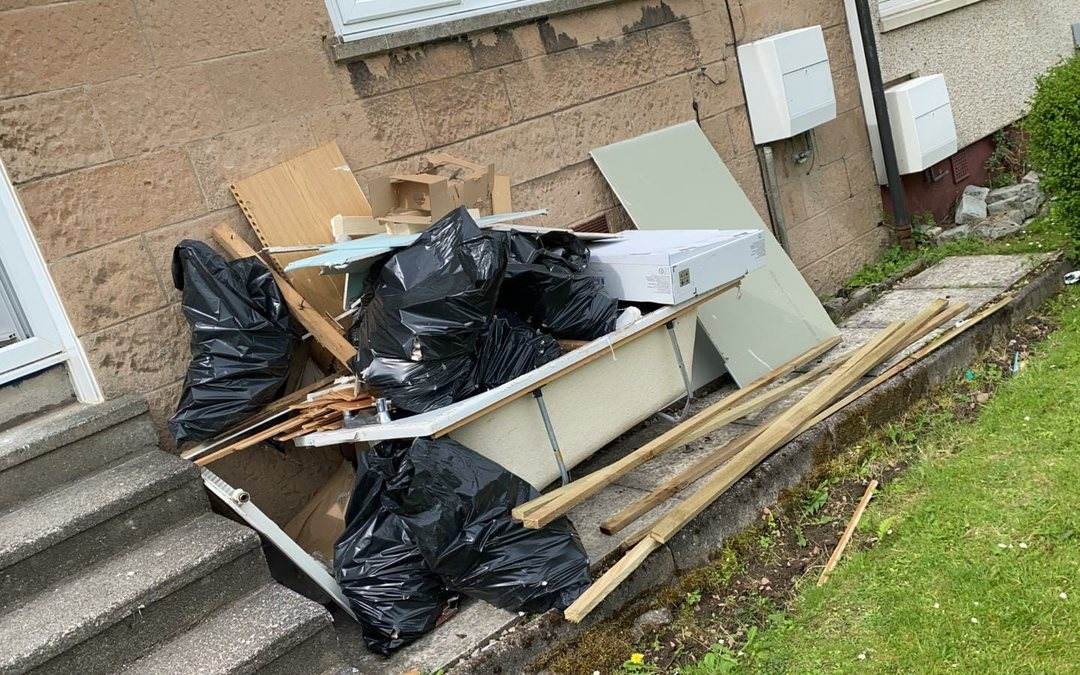
Yes, in almost every case, but it usually happens in two stages. Declutter before the Home Report, the photos and the viewings so the rooms look their best, then clear the house completely before the date of entry. In Scotland a buyer expects to walk into a property that is empty of your belongings, apart from anything agreed in the missives, with no rubbish left behind and the rooms reasonably clean and tidy.
Two separate questions often get mixed up here: how much should you clear to market the house well, and how much must you clear before the buyer moves in? This guide answers both, drawing on our experience of pre-sale house clearance in Glasgow for homeowners, executors and landlords.
Do you need to empty your house to sell it?
No, not to put it on the market. Plenty of people live in their home right through the sale, and a furnished, lived-in home sells perfectly well. What matters at the marketing stage is that it looks spacious, tidy and cared for.
By the date of entry, however, the answer is yes. The date of entry is the day the buyer takes ownership and gets the keys. By then your furniture, personal belongings and rubbish should all be gone, unless the sale includes specific items. Scottish solicitors commonly describe the minimum standard as "broom clean": empty, swept and free of rubbish, even if it has not been professionally cleaned.
What do the missives say about leaving the house empty?
In Scotland the sale becomes binding when the missives are concluded. The missives are the formal letters exchanged between the seller's and buyer's solicitors, and they set out exactly what is included in the price. That might cover carpets, curtains and blinds, light fittings, a cooker, white goods or a garden shed. Anything not listed is generally expected to leave with you.
Every set of missives is different, so read your own and ask your solicitor if anything is unclear. If you would like to leave something behind, such as a wardrobe that suits the room or a set of garden furniture, do not simply assume the buyer will be pleased. Ask your solicitor to agree it in writing first.
Items you would normally leave for the buyer include:
- anything listed as included in the missives
- all keys, including window keys, garage keys and any key fobs for a shared close or car park
- manuals and warranties for the boiler, appliances and any fitted items
- alarm codes and details of the bin collection days
What happens if the seller leaves things behind?
Leaving belongings or rubbish behind is one of the most common causes of a sour end to a sale. The buyer may raise it through their solicitor, and they may ask for the cost of having it cleared. At best it causes stress and awkward phone calls on what should be a good day for everyone. At worst it can lead to a dispute between solicitors after the keys have changed hands.
If something is still to go when you hand over the keys, speak to your solicitor straight away rather than hoping it will not be noticed.
Should a house be cleared before photos and viewings?
A full clearance is not needed, but a thorough declutter makes a real difference. Buyers scroll through listings quickly, and cluttered rooms look smaller in photos. In Scotland most homes also need a Home Report before they go on the market, and the surveyor who prepares it needs clear access to every room, the loft hatch and areas such as the boiler and meters.
Before the surveyor and the photographer arrive, aim to:
- clear worktops, window sills and the tops of wardrobes
- remove surplus furniture so rooms feel open and easy to walk through
- take down most family photos and personal items so buyers can picture themselves living there
- clear a path to the loft hatch, boiler, meters and any outbuildings
- get rid of broken items in the garden, as the outside often appears in the main listing photo
Should you sell a house empty or furnished?
There is no single right answer, and it often comes down to your circumstances.
Selling empty
- Viewings are easy to arrange because nobody is living there.
- Buyers can see the true size of each room, the flooring and the condition of the walls.
- It suits executry sales, landlords selling a rental and owners who have already moved.
- On the other hand, completely bare rooms can feel cold, and every scuff and mark on the walls is on show.
Selling furnished
- Furniture helps buyers judge scale and imagine how a room could work.
- The risk is clutter, dated furniture or very personal decor distracting buyers from the house itself.
A sensible middle ground for many sellers is a light touch: keep a few good pieces that show how each room works, and clear everything else. If you are selling an empty home, check with your home insurer, as many policies have conditions that apply when a property is unoccupied.
When should you clear the house: before marketing or before the date of entry?
Both, in stages. Here is a simple timeline that works for most sales:
- Before marketing: decide what you are taking, what family members want and what may be included in the sale. Declutter ahead of the Home Report survey and photos.
- During viewings: keep the house tidy and avoid letting clutter build up again in spare rooms and outbuildings.
- Once the missives are concluded: you know the date of entry and exactly what stays. This is the time to book the full clearance, ideally a few days before the date of entry rather than the day before.
- After the clearance: clean or arrange a cleaner, take meter readings, check every cupboard one last time and gather the keys and manuals for your solicitor or estate agent.
Clearing a house for sale as an executor
When a house is being sold after a death, the executor sells it, and in Scotland the executor usually needs confirmation from the sheriff court before they have legal authority to deal with the estate. The deceased person's belongings are part of that estate, so the clearance should only go ahead with the executor's agreement. Family members should not sell, give away or dispose of items before then, even with the best intentions. If you are unsure, ask the executor's solicitor.
Give the family a clear window to choose keepsakes and gather paperwork first. Our guide on what to keep when clearing a parent's house covers the documents and personal items worth setting aside.
If the home is being sold because a parent has moved into care, the situation is different, as the belongings are still theirs. We explain that in our guide to clearing a house when a parent moves into a care home.
Do not forget the loft, garage, shed and garden
These are the spaces sellers most often forget, and buyers notice. A loft full of boxes or a shed full of broken tools can cause problems on the day of entry. Include every space when you ask for a quote. You can read more in our guide to whether a house clearance can include the loft, garage and garden.
Landlords selling a former rental, or housing providers preparing an empty property, may find our void property clearance service a good fit.
Pre-sale clearance checklist
- Read your missives and list everything included in the sale.
- Agree with family, or the executor, what each person is keeping.
- Remove paperwork, photographs, jewellery and anything personal yourself.
- Pass on good furniture for reuse where you can, for example through Zero Waste Scotland's reuse service.
- Book the clearance with time to spare before the date of entry.
- Arrange cleaning, take meter readings and leave keys and manuals as agreed.
How Jettison Express can help
Jettison Express clears homes for sale across Glasgow and central Scotland for homeowners, executors, solicitors, estate agents and landlords. We give you an up-front rate before any work starts, and our uniformed, insured team calls ahead on the day. We dismantle furniture, lift carpets and flooring where needed, clear lofts, garages and gardens, and finish with a sweep and tidy so the property is ready for the next stage.
Everything we remove goes back to our Glasgow depot to be sorted, and over 90% is reused or recycled. We are a registered waste carrier and leave paperwork once the job is complete. We do not remove asbestos or hazardous waste. As well as the city itself, we regularly work in the south side, including house clearances in Shawlands and Rutherglen.
If you are getting a house ready to sell, contact Jettison Express or call 0333 880 6800 to talk through the property, your date of entry and what needs to stay.
Frequently asked questions
Do I need to empty my house to sell it?
Not to market it. You can live in the house while it is for sale. By the date of entry, though, it should be empty of your belongings, apart from anything agreed in the missives, with no rubbish left and the rooms reasonably clean and tidy. Check your own missives with your solicitor.
Should a house be cleared before photos and viewings?
A full clearance is not needed, but a good declutter helps. Clear surfaces, remove surplus furniture and personal items, and make sure the Home Report surveyor can reach every room, the loft hatch, the boiler and the meters. Tidy the garden too, as it often appears in the listing photos.
What happens if the seller leaves things behind?
The buyer may raise it through their solicitor and ask for the cost of clearing it. At the very least it causes stress on the day of entry. Plan the clearance with time to spare, and speak to your solicitor straight away if anything has not been removed by the time you hand over the keys.
Should I sell a house empty or furnished?
It depends on the property and your situation. Empty homes are easy to view and show the true size of each room, but can feel cold. Furnished homes help buyers picture living there, but clutter distracts. Many sellers keep a few good pieces and clear the rest.
When should I clear the house: before marketing or before the date of entry?
Both, in stages. Declutter before the Home Report survey, photos and viewings. Once the missives are concluded and you know the date of entry, book the full clearance, ideally a few days early, leaving time for cleaning, meter readings and a final check of every cupboard.
Can I leave furniture for the buyer?
Only if the buyer has agreed to it. In Scotland the missives set out what is included in the sale, and anything not listed is generally expected to go. If you want to leave something, such as a wardrobe or garden furniture, ask your solicitor to agree it in writing first.