
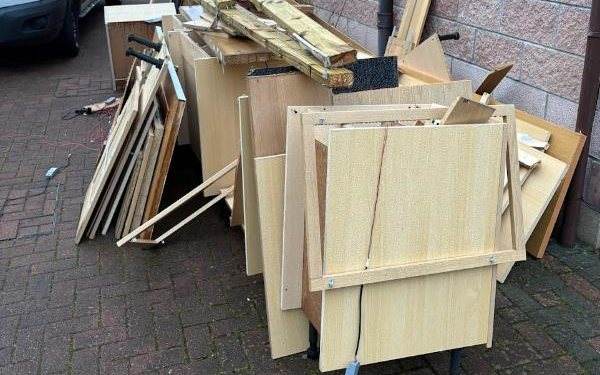
In Scotland, a landlord should not simply throw away belongings a tenant has left behind. If the tenancy has properly ended, the safer approach is to photograph and list everything, write to the former tenant with a clear and reasonable deadline to collect, look after the items with reasonable care in the meantime, and only then arrange disposal. If the tenant seems to have abandoned the home without ending the tenancy, the tenancy has not ended and the belongings are still theirs, so the legal process has to come first.
Please note: this guide is general information, not legal advice. Scottish law differs from English law on this subject, and the right answer depends on your tenancy agreement and the facts of your case. Speak to a solicitor, your letting agent or a landlord advice service before you dispose of anything.
We help landlords and letting agents with end of tenancy clearances and house clearances in Glasgow, and this question comes up often. This guide explains the two situations you might be in, the steps Scottish solicitors recommend, and how to protect yourself before the property is cleared.
Does the English Torts Act apply in Scotland?
Many of the guides you will find online are written for England. They describe a notice procedure under the Torts (Interference with Goods) Act. English guides often refer to legislation that does not apply in Scotland in the same way, so following an English template could leave a Scottish landlord exposed. In Scotland, the position depends on Scottish case law, your tenancy agreement and the Scottish rules on how a tenancy ends, so rely on Scottish guidance or advice.
First, has the tenancy actually ended?
Before you touch anything, work out which situation you are in, because the answer is different for each:
- The tenancy has properly ended and items have been left behind. The tenant gave notice or the tenancy was lawfully brought to an end, they have moved out, and some of their belongings are still in the property.
- The tenant appears to have abandoned the home without ending the tenancy. Rent has stopped, the home looks empty or half empty, there has been no notice and you cannot reach the tenant.
What can a landlord do with belongings left after the tenancy has ended?
In a Scottish case, Harris v Abbey National plc, belongings had been left in a property. The court treated the situation as a gratuitous deposit, which means the person left holding the items had a duty to take reasonable care of them. The court also found the person who left the belongings partly responsible, and his award was reduced by 60%, because he left them and did nothing until it was too late. In short, you may owe a duty of care for the items, but a former tenant who ignores the problem is not blameless either.
Guidance from TC Young, a firm of Scottish solicitors, suggests a careful, documented approach:
- take photographs and make a detailed inventory of what has been left;
- contact the tenant to find out what they want done with the items;
- set out clearly in writing whether you intend to keep or dispose of the items, and the timeframe;
- give the tenant a reasonable chance to collect their belongings.
Landlords who dispose of items without taking these steps take a risk, and the same guidance recommends taking specific advice for your case.
Can I throw away a tenant's belongings?
Not straight away. Items that look worthless to you, such as paperwork or photographs, can matter to the former tenant. Disposing of anything before you have recorded it, written to the tenant and given a fair chance to collect is where landlords get into difficulty.
How long do I have to keep a tenant's belongings?
The Scottish guidance we have seen does not rely on one fixed number of days for every case. Instead, it focuses on telling the tenant in writing what you plan to do, giving a clear deadline, and making sure that deadline is reasonable. What counts as reasonable depends on the circumstances, such as whether you have a forwarding address and what has been left, so ask your solicitor if you are unsure.
What if the tenant has abandoned the property without ending the tenancy?
This is the situation where landlords most often make mistakes. Abandonment does not end a tenancy automatically in Scotland.
Private residential tenancies
For a private residential tenancy, you cannot simply change the locks or relet the property because the tenant seems to have gone. You will usually need to serve a notice to leave and obtain an eviction order from the First-tier Tribunal. Until the tenancy has been brought to an end, the belongings left behind still belong to the tenant and must be stored properly. Take advice from a solicitor or your letting agent before you act.
Council and housing association tenancies
Social landlords, such as councils and housing associations, have their own statutory abandonment process. The landlord serves notice, and according to Shelter Scotland the tenant can stop the process by responding within 4 weeks of the notice. If you are a family member dealing with a relative's social tenancy after a death, rather than an abandonment, our guide on clearing a council or housing association home after a death covers the separate rules.
Can I charge the tenant for removing their items?
Possibly, but keep it well documented. Keep receipts, invoices and any storage costs, along with your photographs, inventory and copies of every letter and email. If your tenancy agreement allows it, you may be able to claim reasonable costs from the deposit, but that has to go through the tenancy deposit scheme's own process rather than being taken directly. Whether you can recover costs, and how, depends on your agreement and the facts, so ask your solicitor or letting agent.
A practical checklist for landlords and letting agents
- Confirm the tenancy has ended. If it has not, or you are unsure, stop and take advice before going further.
- Photograph every room. Include cupboards, the loft, any shed or garage, and bin stores.
- Make a detailed inventory. List the items, their condition and where you found them.
- Set aside personal papers and valuables. Bank letters, ID documents, photographs, keys, jewellery and cash should be bagged, labelled and kept securely.
- Write to the tenant. Use the forwarding address, last known address, email and phone number you hold. List what was left, where it is being kept, the deadline to collect and what will happen after that date. Keep copies.
- Store the items with reasonable care. Keep them dry and secure. Do not leave anything in the close or common stair, which is often the only way out in a fire, or in the back court, where it can be treated as fly-tipping with a £500 fixed penalty.
- Record any reply. If the tenant asks for more time or arranges a collection, note it and stick to what you agree.
- Clear the property properly. Once the deadline has passed and you are entitled to clear, use a registered waste carrier and keep the paperwork.
- Keep a record of costs. File receipts with the rest of your evidence.
How to prevent the problem next time
The best protection is a clear clause in the tenancy agreement explaining what will happen to belongings left at the end of the tenancy, which TC Young recommends. Ask your solicitor or letting agent to check the wording. It also helps to remind tenants that everything must go, including lofts and sheds, and to ask for a forwarding address when they leave.
How Jettison Express can help
Once you are entitled to clear the property, Jettison Express handles void property clearances in Glasgow for landlords, letting agents and housing providers. We can work from your inventory and keep list, set aside documents, photographs and anything of value for you, and remove the rest. Our guide on what happens to valuables found during a clearance explains how finds should be handled, and papers containing personal data can go through our confidential waste disposal service.
You get an up-front rate before work starts. Our uniformed and insured team calls ahead on the day, dismantles furniture, lifts carpets where needed and finishes with a sweep and tidy. Everything goes to our Glasgow depot to be sorted, with over 90% reused or recycled. We are a registered waste carrier and we leave paperwork once the job is complete for your records. We do not remove asbestos or hazardous waste. We clear rented flats across the city, from tenement flats in Shawlands to the east end, and you can read more about why Glasgow landlords and estate agents use us.
If you have reached the point where you can clear a rental property, contact Jettison Express or call 0333 880 6800 to arrange a quote.
Frequently asked questions
What can I do with a tenant's belongings left behind in Scotland?
If the tenancy has properly ended, photograph and list the items, write to the former tenant setting out what you plan to do and a reasonable deadline, and look after the items in the meantime. Only dispose of them after that, ideally with legal advice. This is general information, not legal advice, and Scottish law differs from England.
How long do I have to keep a tenant's belongings?
Scottish guidance does not give one fixed number of days for every case. The safer approach is to write to the tenant, give a clear and reasonable deadline to collect, and keep the items safely until it passes. What is reasonable depends on the circumstances, so ask a solicitor if you are unsure.
Can I throw away a tenant's belongings?
Not straight away. Disposing of belongings without photographs, an inventory, written contact with the tenant and a reasonable chance to collect is a risk for the landlord. Follow those steps first and take advice for your case. If the tenancy has not ended, the items still belong to the tenant.
What if the tenant has abandoned the property without ending the tenancy?
Abandonment does not end a tenancy automatically in Scotland. For a private residential tenancy you cannot simply change the locks or relet; you usually need a notice to leave and a First-tier Tribunal eviction order. Social landlords have a statutory abandonment process. The belongings remain the tenant's property until then.
Can I charge the tenant for removing their items?
You may be able to, depending on your tenancy agreement and the facts. Keep receipts, invoices, storage costs, photographs and copies of all correspondence. Any deduction from the deposit must go through the tenancy deposit scheme's own process. Ask your solicitor or letting agent before making a claim.
Does the English Torts Act apply in Scotland?
English guides often refer to the Torts (Interference with Goods) Act and its notice procedure, but that legislation does not apply in Scotland in the same way. Scottish landlords should rely on Scottish guidance, their tenancy agreement and advice from a Scottish solicitor rather than an English template.