
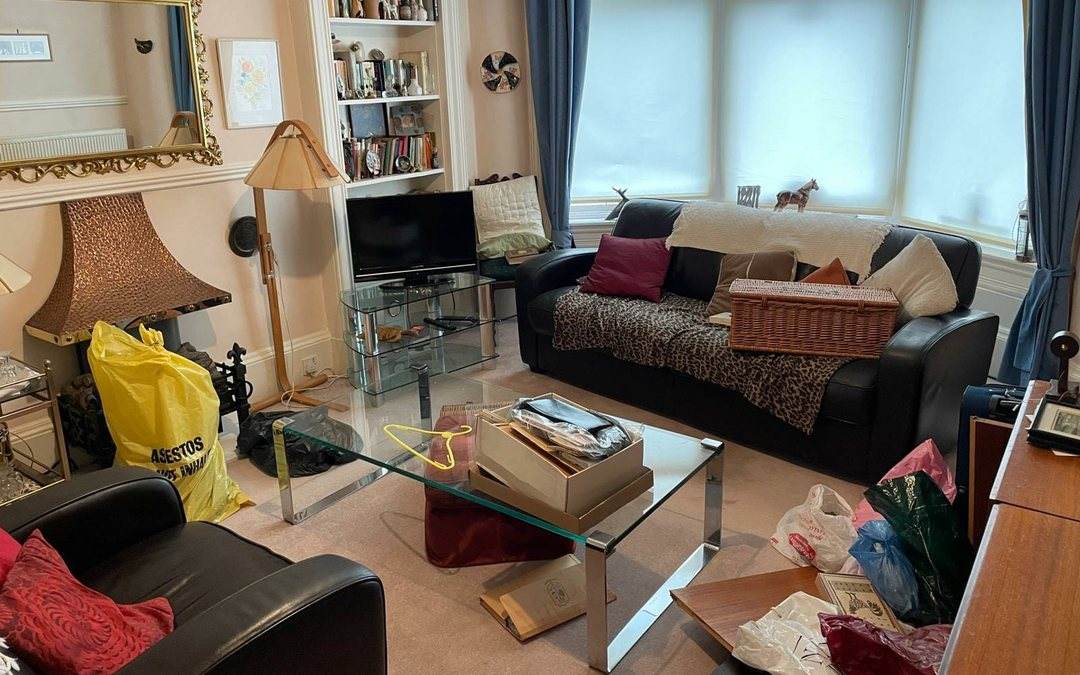
Yes, in many cases you can prepare a house for clearance before confirmation is granted, and with the executor's agreement some of the work can often start early. What you should not do is sell, give away or dispose of anything of value before the executor has legal authority, because that can count as interfering with the estate. If in doubt, ask the executor or their solicitor before anything leaves the house.
Families often ask us this when a house sits empty, a landlord wants the keys back or council tax is mounting. We provide house clearance in Glasgow for families, executors and solicitors, including bereavement and probate clearances, and this guide explains what confirmation is, what is generally safe to do before it is granted, what is better left until afterwards and how to apply. It is general information, not legal advice.
Can you clear a house before confirmation in Scotland?
There is no single answer for every estate. It depends on who the executor is, whether the home was owned or rented, and what is in it. It helps to think of the work in two parts:
- Protecting and preparing. Securing the home, removing food and rubbish, and recording and safeguarding what is there. This is generally sensible, with the executor's agreement.
- Disposing of the estate. Selling, giving away or throwing out anything of value. This should wait until the executor has authority, and then follow their instructions.
What is confirmation?
Confirmation is the Scottish equivalent of probate. The Scottish Courts and Tribunals Service describes it as a legal document from the court giving the executor authority to uplift money or property belonging to the person who died from whoever holds it, such as a bank, and to administer and distribute it according to law. Banks, building societies and insurers often ask to see it.
Every estate needs an executor. Usually the executor is named in the will. If there is no will, or no one able to act, the court appoints an executor-dative.
Is it okay to clear a house before probate is granted?
Probate is the term used in England and Wales, so in Scotland the question is really about confirmation. The principle is the same, though: the belongings of the person who died form part of their estate, and the executor decides what happens to them.
What is vicious intromission?
Vicious intromission is a term of Scots law for the unauthorised assumption of ownership of, or interference with, a deceased person's estate. In everyday terms, it means taking, selling, giving away or getting rid of someone's belongings after their death without the authority to do so. The simple rule is that nothing of value leaves the house without the executor's agreement, and the executor takes advice from their solicitor if unsure.
What can you remove before confirmation?
With the executor's agreement, these steps are generally safe and sensible before confirmation:
- Securing the property and gathering every set of keys.
- Removing perishable food from the fridge, freezer and cupboards.
- Clearing obvious rubbish, such as old newspapers, packaging and out-of-date food.
- Taking photographs of every room and making an inventory of items of value.
- Finding the will, bank and pension letters, deeds, insurance papers and bills.
- Setting aside cash, jewellery and other valuables somewhere safe, with a note of what was taken and who holds it.
- Removing items a landlord needs gone, if the home was rented and the executor has agreed.
- Reducing the risks of an empty house: redirecting post, telling the insurer, as insurers often have conditions for unoccupied homes, and turning off the water in winter.
For a fuller list of the papers and keepsakes to look for, read our guide on what to keep when clearing a parent's house.
What should wait until confirmation is granted?
- Selling furniture, antiques, jewellery, a car or anything else of value.
- Giving items away to friends, neighbours or charities.
- Sharing out heirlooms and items named in the will.
- A full clearance of contents that may have value, before they have been listed and, where needed, valued.
There is a practical reason too. When applying for confirmation, the executor must give an inventory of everything the person owned at the time of death. If valuable items have already gone, it is harder to value the estate properly.
Can you live in a house before confirmation?
This is a question for the executor and their solicitor, because it depends on who owns the house, what the will says and whether anyone else has rights to it. A few practical points:
- If someone moves in, the house is no longer empty, which can affect empty property arrangements such as the council tax exemption described below.
- Tell the home insurer about any change in who is living there.
- If the home was a council or housing association tenancy, different rules apply. A spouse, civil partner, qualifying cohabitee, joint tenant or, in some cases, a family member may be able to take over the tenancy, and Shelter Scotland says anyone who keeps living there after the death will pay rent or an occupancy charge.
What if the home was rented?
If the person rented their home, the landlord will usually want it back, and the clearance often cannot wait for confirmation. Speak to the landlord early and ask how long you have and how rent will be handled. For council and housing association homes, the Model Scottish Secure Tenancy Agreement says rent will be charged only for the actual period of occupation, so ask your landlord how this applies. Wheatley Homes Glasgow, one of the housing associations that now runs many homes once owned by the council, asks tenants ending a tenancy to give at least four weeks' notice in writing and to leave the home clean, empty and in a reasonable condition, and it may charge if it has to clean or move items. Our void property clearances are designed for this kind of handover.
Do you pay council tax while waiting for confirmation?
In Glasgow, an exemption from council tax applies where a property is unoccupied because the person liable has died. It is not automatic: the executor must apply. While confirmation has not been granted there is no statutory time limit. Once confirmation is granted, the exemption lasts a maximum of six months, and after that unoccupied property charges apply. So it is worth planning the clearance before confirmation arrives, ready to book once the executor has authority. Our guide to council tax on an empty house after a death in Scotland explains the detail. Other councils have their own rules.
What are the requirements for obtaining confirmation?
- There must be an executor, either named in the will or appointed by the court as executor-dative.
- The executor must provide an inventory: a list of all the deceased's property at the time of death.
- The inventory must include at least one item of money or property in Scotland.
- The estate must be valued and any inheritance tax forms filled in.
- The procedure differs depending on whether there is a will.
Can you apply for confirmation without a solicitor?
Yes, in some cases. If the estate is a small estate, with a total value of £36,000 or less, the sheriff clerk can help the executor prepare the inventory at an appointment at the local sheriff court. Debts such as funeral expenses are not deducted when working out that total. The small estates guidance explains the process. Larger or more complex estates usually use a solicitor, and Citizens Advice Scotland says legal help is usually a good idea if there is a house or land in the estate, the estate is large, or there are disagreements.
To see how the clearance fits into the whole process, read what an executry clearance involves.
How Jettison Express can help
We work with families and solicitors on executry clearances across Glasgow and the surrounding areas, from tenement flats in Shawlands to family homes further out. You can ask us for a quote while you wait for confirmation, so the clearance is ready to book once the executor gives the go-ahead.
- An up-front rate before any work starts.
- A friendly, uniformed and insured team who call ahead when they are on their way.
- Keepsakes, papers and valuables set aside, as the executor instructs.
- Furniture dismantled, carpets lifted and a final sweep and tidy.
- Everything sorted at our Glasgow depot, with over 90% reused or recycled.
- A registered waste carrier, with paperwork left once the job is complete.
We do not remove asbestos or hazardous waste.
If you are an executor or acting for one, contact Jettison Express or call us on 0333 880 6800. We will talk the job through with you and give you a clear, up-front rate.
Frequently asked questions
Can you clear a house before confirmation in Scotland?
You can usually prepare, and with the executor's agreement some work can start early: securing the home, removing food and rubbish, photographing rooms and finding paperwork. Selling, giving away or disposing of anything of value should wait until the executor has authority through confirmation. If unsure, ask the executor's solicitor first.
Is it okay to clear a house before probate is granted?
Probate is the English and Welsh term. In Scotland the executor obtains confirmation from the sheriff court instead. Before confirmation, protecting and preparing the home is generally sensible with the executor's agreement, but selling or giving away belongings is risky, because Scots law treats unauthorised dealing with an estate as vicious intromission.
Can you live in a house before confirmation?
It depends on who owns the house, what the will says and whether anyone else has rights to it, so ask the executor and their solicitor. If someone moves in, the house is no longer empty, which can affect the council tax exemption, and the insurer should be told. Rented homes follow the landlord's and tenancy rules.
What are the requirements for obtaining confirmation?
There must be an executor, named in the will or appointed by the court. The executor must give an inventory of everything the deceased owned at the time of death, including at least one item of money or property in Scotland. The estate must also be valued and any inheritance tax forms filled in.
Can you apply for confirmation without a solicitor?
Yes, for a small estate worth £36,000 or less the sheriff clerk can help the executor prepare the inventory at an appointment at the local sheriff court. Funeral expenses and other debts are not deducted when working out the value. Larger estates, estates with a house or land, and disputed estates usually benefit from a solicitor.
What can you remove before confirmation?
With the executor's agreement, you can usually remove perishable food and obvious rubbish, gather paperwork and the will, and move cash, jewellery and other valuables somewhere safe with a written record. If the home was rented, items the landlord needs gone may be removed. Furniture, heirlooms and anything of value should not be sold or given away yet.